
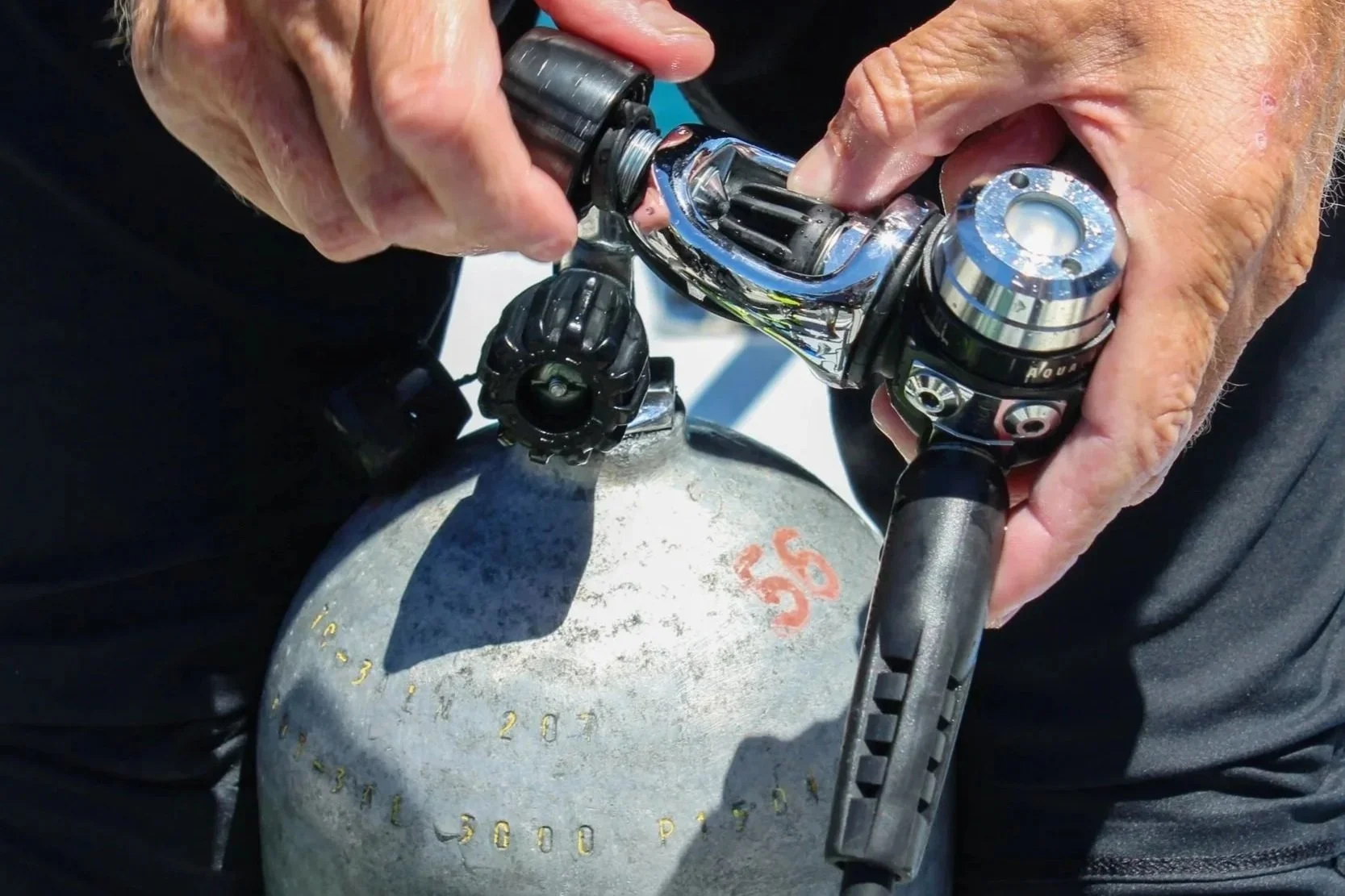
Why your dive gear needs servicing
and why your garage is not the place
Your regulator and BCD don’t know it’s overdue for a service. It will happily keep working until the one day you really need it and it doesn’t!
That’s why servicing is one of the most important things you can do as a diver.
Why bother?
Your kit is life support equipment. Underwater, it’s the only thing between you and a very bad day. A regulator can look spotless on the outside while the tiny seals, springs and filters inside are wearing, hardening or quietly collecting salt.
Regular servicing of your kit gives you:
Safety. Worn parts get replaced before they fail, not during a dive.
Reliability. Smooth breathing, no free-flows, no surprises at 20 metres.
Longer kit life. A service is much cheaper than a new regulator.
Warranty protection. Most manufacturers want to see a service history by an authorised technician.
How often?
Every manufacturer is slightly different, so check yours. As a general guide:
Regulators: usually once a year, or as the manufacturer states, even if you’ve barely used them. Rubber and seals age on the shelf too.
BCDs: an annual check of the inflator, dump valves and bladder.
Cylinders: a 2.5-year visual inspection, plus a hydrostatic pressure test 2.5 years after the visual. Your technician can confirm the schedule that applies to your cylinders.
Drysuits: check the seals and zips every year, and replace seals when they perish.
Dive computers: battery changes and pressure testing, so it doesn’t die mid-dive.
The DIY temptation
We get it. You watched a 14-minute video. You own a screwdriver. How hard can it be?
Here’s how DIY regulator servicing usually goes:
Step 1: Take it apart with total confidence.
Step 2: Discover there are more tiny parts than you started with.
Step 3: Find one tiny spring under the sofa three weeks later.
Step 4: Put it back together “close enough.”
Step 5: Test it on a dive. Alone. Over the weekend.
Please don’t.
What “properly serviced” actually means
A proper service isn’t a quick rinse and a spray of silicone. A qualified technician will:
Strip the regulator completely and clean it ultrasonically.
Replace the O-rings, seats, and filters from the manufacturer’s service kit.
Rebuild to factory specification using the correct tools and torque settings.
Test the intermediate pressure, cracking effort, and breathing performance on a test bench.
Record the service so you have a history, not just a hopeful feeling.
Certifications: what to look for
Here’s the bit people miss. Your own dive certification (Open Water, Advanced and so on) teaches you to use and look after your kit. It does not qualify you to service it.
Look for a technician who:
Is trained and certified by the manufacturer of your equipment, with the paperwork to prove it.
Uses genuine manufacturer service kits and tools.
Keeps service records and gives you a dated record or service card.
Will happily tell you what they replaced and why.
A friendly “I did a course once” is not a certification, however confident the sentence sounds.
Where to get it done
Servicing is best done by a local dive centre where you can speak to the technician face to face and ask questions.
At Bouley Bay Dive Centre, you can pop in or get in touch through scubadivingjersey.com to talk through what your kit needs.
A quick checklist before your next dive season
When was each item last serviced?
Any stiff buttons, odd noises, slow leaks or sticky inflators?
Are your cylinders within their inspection dates?
Do you have service records you can actually find?